A wave of fresh military strikes in Iran, spearheaded by Israel with coordinated U.S. support, has dramatically escalated tensions in the Middle East—yet many observers believe it may also mark a critical turning point. As Israel continues to bombard key military and nuclear facilities in Iran, former U.S. Army General Jack Keane suggested the Iranian regime may be “on its last steps.”
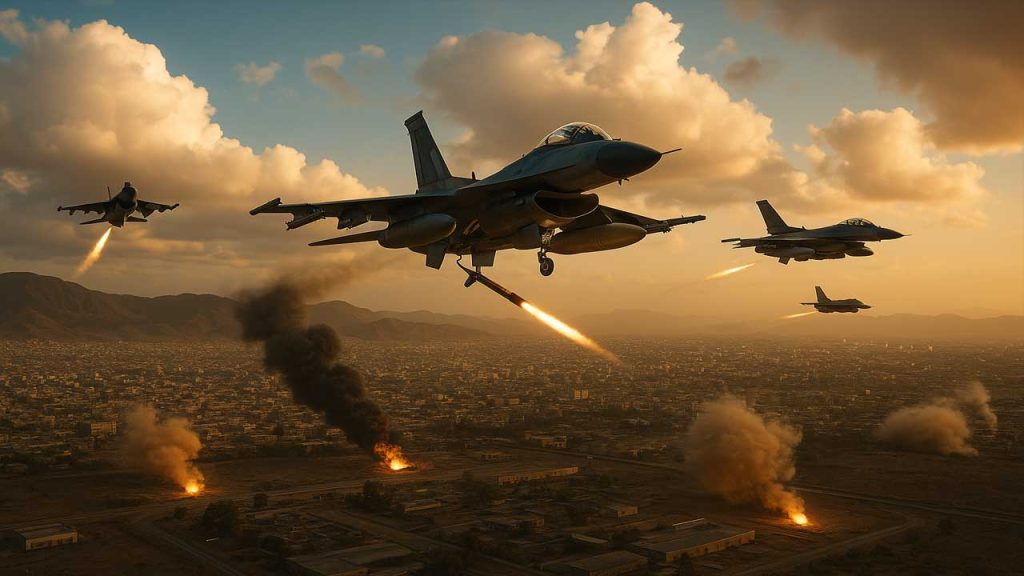
The situation intensified following Iran’s latest missile attacks on Israel. In response, Israeli warplanes launched more than 100 missiles over the span of two hours, hitting targets ranging from command centers of Iran’s Revolutionary Guard to aging aircraft and airbases. Among the most symbolic targets was the Fordow nuclear facility, already damaged by a prior U.S. strike. Israeli forces struck access roads, rendering the site inoperable.
This surge in military activity follows the assassination of Hezbollah leader Hassan Nasrallah, a close ally of Tehran. Israeli Prime Minister Benjamin Netanyahu stated that following Nasrallah’s removal, Iran accelerated its nuclear program. Netanyahu emphasized that Iran was dangerously close to assembling nuclear weapons, possessing enough enriched uranium for 9 bombs. “Therefore,” he said, “we had to act.”
Public support in Israel for U.S. intervention has grown. In Tel Aviv, signs have gone up thanking President Donald Trump for authorizing the attack on Iran’s nuclear infrastructure. Trump’s decision marks the first use of 15-ton “bunker buster” bombs in combat, deployed via a record-setting B-2 stealth bomber mission that targeted and successfully eliminated three major nuclear sites.
General Keane, now a Fox News Senior Strategic Analyst, highlighted the strategic importance of the attack. “We’re in such a better place as a result of the strike,” he explained, calling this a pivotal moment that could lead either to further military escalation or diplomatic resolution.
According to Keane, Iran’s path forward presents several options. One is to return to the negotiating table—though the Trump administration would demand stricter terms than in previous nuclear deals. These would include complete dismantling of remaining nuclear infrastructure, verified inspections, the elimination of ballistic missile programs, and a permanent halt to support for militant proxy groups like Hezbollah and the Houthis.
However, Iran’s leaders are facing internal and external pressures. “There is humiliation among the elites,” Keane said, noting that much of the Iranian power structure is reeling from the speed and force of recent allied attacks. With missile supplies dwindling and domestic unrest growing, Iran’s leadership appears fractured and uncertain.
Still, retaliation remains a possibility. Keane outlined a spectrum of Iranian responses, from symbolic strikes in Iraq or Syria—similar to what followed the U.S. assassination of General Qasem Soleimani—to a full-scale attack on U.S. interests or allies in the region. The final and most dangerous scenario would be an unrestrained assault on the U.S. homeland or its bases, a move that would invite overwhelming American retaliation.
“If Iran harms the U.S., every target in their country is on the table,” said Keane, who noted that any such move would likely result in strikes on Iran’s oil and gas infrastructure—crippling its economy. “If we destroy the oil and gas, they’re done,” he added.
In the meantime, the U.S. remains on alert, with reports emerging of a “shelter in place” order at the U.S. embassy in Qatar. Both nations are preparing for potential next moves from Tehran as regional tensions remain volatile.
The coming days will reveal whether this moment ushers in another chapter of war—or if it becomes the foundation for a new and tougher diplomatic path forward.